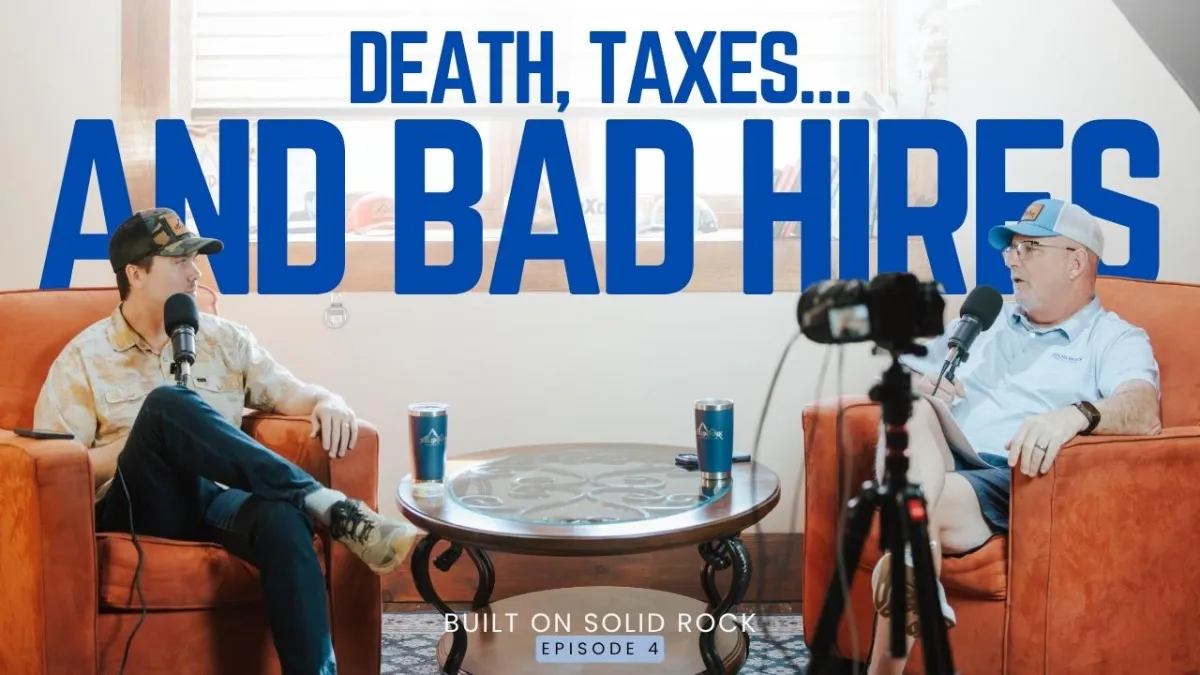
Death, Taxes, and Bad Hires
Death, Taxes, and Bad Hires
Why the Right Hiring Strategy Changes Everything
There are a few things in business you can count on.
Death.
Taxes.
And if you are not intentional about hiring… bad hires.
In our latest Built on Solid Rock podcast episode, “Death, Taxes, and Bad Hires,” we break down a reality most business owners learn the hard way:
Hiring is not just an HR function.
It is one of the most important business decisions you will make.
The Cost of Getting It Wrong
Every company has felt it.
The hire that looked good on paper…
Interviewed well…
Seemed like the right fit…
And then did not work out.
What most people underestimate is that a bad hire is not just frustrating. It is expensive.
It costs:
Time spent interviewing, onboarding, and training
Lost productivity while the wrong person is in the seat
Damage to team morale
Missed opportunities and delayed growth
And then you have to start over.
Bad hires are not rare events. They are predictable outcomes of a broken process.
Why “Post and Pray” Does Not Work
Platforms like ZipRecruiter, Indeed, and job boards serve a purpose. But they are tools, not solutions.
They rely on one thing:
People applying.
Here is the problem:
The best candidates are not applying.
Top performers are working. They are producing. They are not sitting on job boards refreshing listings. They are passive, selective, and cautious about change.
When you rely only on job postings, you are pulling from the most available talent, not the most aligned talent.
That is where many hiring processes begin to fail.
The Value of a Real Recruiter
A strong recruiter does not just send resumes.
They do three critical things:
1. They Find Talent You Cannot See
Recruiters go directly to the market. They identify, engage, and qualify candidates who are not actively looking but are open to the right opportunity.
This expands your reach beyond the obvious pool.
2. They Qualify for Fit, Not Just Skill
A resume tells you what someone has done.
A recruiter tells you:
Why they would leave
What they actually want
Whether they are aligned with your role, culture, and expectations
This is where most bad hires are avoided.
3. They Create Urgency and Alignment
Great candidates move fast.
Recruiters manage communication, expectations, and timing so that:
You do not lose candidates to competitors
Candidates stay engaged in your process
Decisions are made with clarity
Speed without structure leads to mistakes.
Structure without speed leads to missed opportunities.
A good recruiter balances both.
The Power of a Great Hiring Process
Even the best recruiter cannot fix a broken process.
The companies that win in hiring have a few things in common:
Clarity
They know exactly what the role is, what success looks like, and what kind of person thrives in it.
Alignment
Everyone involved in hiring is on the same page. No conflicting opinions. No shifting expectations.
Speed
They move quickly when they find the right candidate. Not recklessly, but decisively.
Communication
Candidates are informed, respected, and engaged throughout the process.
When these elements are in place, hiring becomes predictable.
Recruiting as a Business Strategy
Too many companies treat recruiting as a transaction.
Post a job.
Review resumes.
Interview candidates.
Make an offer.
But the companies that grow consistently treat hiring as a strategy.
They understand:
The cost of getting it wrong
The value of getting it right
The importance of partnering with experts
They do not just ask, “Who can we hire?”
They ask, “Who should we hire, and how do we get them?”
The Bottom Line
Bad hires are not random.
They are the result of:
Weak processes
Limited talent pools
Poor qualification
Slow or unclear decision-making
The solution is not more resumes.
It is better strategy.
At Solid Rock Recruiting, we believe in building hiring processes that prioritize alignment, urgency, and trust.
Because when you get hiring right, everything else in your business gets easier.
Build better processes.
Hire better people.
Avoid the one thing every business eventually faces…
Bad hires.
