New Blog Post: Culture Is What People Experience
Culture Is What People Experience
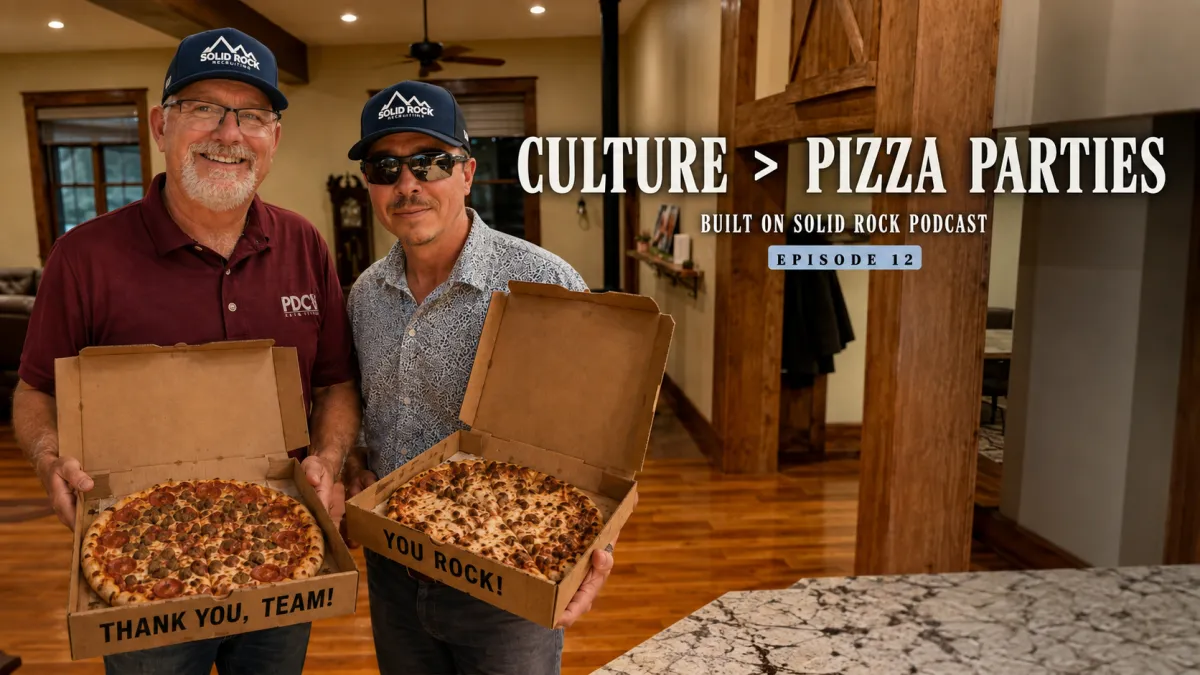
Built on Solid Rock Podcast, Episode 12
Everybody says they have a great company culture. But here is a better question: Do your employees agree?
In Episode 12 of the Built on Solid Rock Podcast, Shaun and John talk about what it really takes to build a company culture people actually want to be part of. Because culture is not your mission statement. It is not the words painted on the conference room wall. It is not the company Christmas party, the free lunch, or the branded T-shirt.
Culture is what people experience every day when they come to work.
It is how people are treated. It is how leaders communicate. It is what happens when someone makes a mistake. It is whether people are trusted to do their jobs. It is whether accountability applies to everyone or only to certain people. Ultimately, it is whether the people working for you believe they matter.
Every company already has a culture. The question is whether you built yours intentionally or simply allowed it to happen.
Culture develops through thousands of seemingly small interactions. How does a manager respond when someone disagrees? What happens when an employee has a great idea? Does leadership listen? Are expectations clear? Do people understand where the company is going? Can employees make decisions without constantly looking over their shoulders?
Those moments may seem small, but together they determine what it feels like to work inside your company.
Great employees want more than a paycheck. Compensation matters. Benefits matter. Opportunity matters. But those things alone do not create loyalty.
People want to know they are part of something. They want to be trusted. They want opportunities to grow. They want to understand how their work contributes to something bigger. They want leaders who communicate honestly and consistently. Most importantly, they want to be treated like people, not tools used to produce a number.
You can pay someone enough to get them through the door. Culture helps determine whether they want to stay.
One of the quickest ways to destroy that culture is micromanagement. If you hire talented people and then refuse to trust them, eventually they will stop taking initiative or they will leave. Neither outcome is good for your business.
Strong leaders establish clear expectations, provide the necessary resources, coach their people, hold them accountable, and then give them room to perform. That does not mean lowering standards. In fact, great cultures often have extremely high standards.
Trust and accountability are not opposites. Great companies have both.
People should know exactly what is expected of them and understand that they will be held accountable for results. At the same time, they should have the freedom to use their abilities, make decisions, solve problems, and grow.
Culture also starts at the top. Business owners sometimes talk about culture as though it is something their employees create. Leadership creates the conditions in which culture develops.
If leaders operate from fear, the organization eventually feels fearful. If leaders refuse accountability, accountability disappears throughout the organization. If leadership says one thing and does another, employees notice.
The opposite is also true. When leaders communicate openly, communication spreads. When leaders take ownership, ownership spreads. When leaders recognize people and genuinely care about them, people feel valued. When leaders demonstrate integrity even when doing so costs them something, trust grows.
Culture does not begin in the employee handbook. It begins with leadership.
The same is true of core values. Almost every company has them. Far fewer companies actually live them.
Core values should not simply describe what a company hopes to become. They should influence how the company behaves. They should affect how you hire, how you fire, how you treat customers, how you handle conflict, what behavior gets rewarded, and what behavior you refuse to tolerate.
If your values disappear the moment living them becomes inconvenient, they were never really values. They were marketing.
This conversation about culture is not simply about making employees feel good. Culture has a direct impact on business. It affects recruiting, retention, customer service, productivity, referrals, reputation, and ultimately growth.
When people love where they work, they talk about it. When people hate where they work, they talk about that too.
Your employees are some of your most powerful brand ambassadors, whether you intended them to be or not. That means a great culture can become one of the strongest competitive advantages your company has.
At Solid Rock Recruiting, we believe businesses are built through people. That philosophy influences how we recruit, how we lead, and how we think about culture.
People are not inventory. Employees are not tools. Leadership is not about squeezing as much production as possible out of someone until they have nothing left to give.
Great leadership is about creating an environment where talented people can become even better.
That requires trust, communication, accountability, freedom, and consistency. It requires caring about people beyond what they can produce for you today. It requires understanding that when you invest in people, you are investing in the long-term health of your business.
You cannot fake culture for very long. Eventually, people discover what your company actually believes.
If you really want to understand your culture, stop asking what is written on the wall and start paying attention to what happens in the hallways. Ask what employees say about the company when leadership leaves the room. Ask whether your best people would recommend your company to someone they care about. Ask whether talented people are growing or simply surviving.
And maybe ask yourself the most uncomfortable question of all.
If you were not the owner, would you want to work here?
The answer may tell you more about your culture than any slogan, mission statement, or employee survey ever could.
Building a great company culture does not happen through words. It happens through decisions. It happens through leadership. It happens one person, one conversation, and one day at a time.
That is how you build a company where people do not simply have to work.
You build a company where great people want to work.
Listen to Episode 12 of the Built on Solid Rock Podcast for the full conversation about leadership, trust, accountability, and what it really takes to build a great company culture.
Listen and subscribe at https://builtonsolidrock.buzzsprout.com
